
Historically, human community has been defined by geographic proximity, shared ideological belief, or familial lineage. You belonged to the village you were born in, the religious institution you attended, or the political party your parents supported. In the modern digital era, a profound sociological shift has occurred: the primary mechanism for community formation has become shared visual language, or what is broadly referred to as 'aesthetic connection.' For a generation navigating unprecedented levels of physical isolation and institutional distrust, finding a group of strangers on the internet who share a hyper-specific appreciation for a certain color palette, architectural style, or vintage fashion era is no longer a shallow exercise in consumerism; it is a fundamental survival strategy for finding belonging.
Understanding this phenomenon requires moving beyond the dismissal of social media as purely narcissistic. It requires examining the algorithmic architecture that groups users by visual preference, the psychological comfort derived from highly curated digital spaces, and the way specific aesthetic movements serve as distinct socio-political responses to modern anxieties. According to research published in the Journal of New Media & Society, visual-centric platforms have fundamentally rewired how Generation Z and Millennials perceive social identity, shifting the axis from 'who you know' to 'how you see the world.'
The Sociology of the Internet Aesthetic
To understand the depth of aesthetic connection, one must first define what an 'internet aesthetic' truly represents. It is not merely a mood board or a Pinterest folder; it is a comprehensive visual ideology that encodes specific value systems. Consider 'Cottagecore,' an aesthetic that exploded in popularity during the early 2020s. Visually, it relies on images of fresh-baked bread, overflowing gardens, vintage floral dresses, and rustic kitchens. However, sociologically, Cottagecore is a direct rejection of hustle culture, corporate capitalism, and the relentless digitalization of daily life. The people connecting over these images are not just bonding over a shared love of sourdough; they are bonding over a shared exhaustion with modernity and a yearning for tangible, agrarian simplicity.
Similarly, 'Dark Academia' — characterized by gothic architecture, tweed blazers, classical literature, and moody library lighting — is not just a fashion trend. It is a romanticization of classical education and a longing for intellectual rigor, often embraced by students who feel alienated by the commodified, standardized-testing-driven reality of modern university life. When an individual adopts an aesthetic and curates their digital presence to align with it, they are broadcasting a complex set of values without having to articulate a manifesto. In a digital environment where text-based discourse frequently devolves into hostile polarization, visual aesthetics provide a safer, more intuitive method of finding one's 'tribe.' A shared aesthetic signals shared underlying values, effectively acting as a non-verbal shorthand for trust and affiliation.
The Psychological Architecture of Visual Validation
To understand why aesthetic connection is so powerful, we must look at cognitive load and reward systems. The human brain processes visuals approximately 60,000 times faster than text, meaning visual cues bypass the critical, analytical prefrontal cortex and tap directly into the limbic system, the emotional center of the brain. When a user scrolls and encounters an image that perfectly aligns with their internal visual preferences, they experience a micro-hit of dopamine. This is the same neurological reward system activated by sugar or social approval. Over time, the algorithm learns to feed this specific visual dopamine loop, creating a powerful feedback cycle of engagement and comfort.
Furthermore, sociologist Sherry Turkle, in her seminal work Alone Together, argues that digital connectivity often provides the illusion of companionship without the demands of intimacy. Aesthetic communities fit this thesis perfectly. They allow individuals to feel understood and validated through a shared visual language without the vulnerability required for deep emotional conversation. This lowers the barrier to entry for community participation; you do not need to be an expert in politics or philosophy to belong—you simply need to post a picture of a foggy London street or a perfectly arranged cheese board to receive immediate, positive reinforcement from your 'aesthetic peers.'
Algorithmic Taste-Making and Echo Chambers
The speed and intensity of aesthetic connection are heavily facilitated by the architecture of modern social media algorithms. Platforms like TikTok, Instagram, and Pinterest no longer rely primarily on the social graph (showing you content from people you explicitly follow). Instead, they utilize the interest graph, analyzing millions of micro-interactions — how long a user hovers over an image of a mid-century modern chair, whether they save a video about brutalist architecture — to serve them increasingly specialized visual content. This algorithmic curation accelerates the formation of aesthetic communities, connecting users with thousands of like-minded individuals almost instantaneously.
The Attention Economy's Role in Aesthetic Reinforcement
The algorithmic model is not neutral; it is engineered to maximize 'dwell time.' Platforms actively penalize visual heterogeneity because eclectic content confuses the machine-learning model. If a user frequently engages with minimalist, monochrome design, the algorithm will rapidly narrow the funnel, showing less maximalist or eclectic content. This creates a 'tightening spiral' where users become increasingly radicalized in their visual preferences over time. While this increases user retention for the platform, it also reinforces rigid aesthetic boundaries, making it difficult for users to explore styles that sit outside their curated digital bubble. The algorithm rewards conformity to the visual rules of the community, which, while fostering a sense of intense belonging, can ultimately stifle genuine creative exploration.
The Paradox of Curated Authenticity
A central tension in the digital age is the pursuit of authenticity within highly curated environments. The most successful aesthetic communities manage to balance visually pleasing content with emotional vulnerability. A perfectly lit photograph of a messy artist's studio is more compelling than a sterile, artificially clean room because it signals human presence and imperfection. This is where aesthetic connection differs from traditional advertising. Advertising uses beautiful imagery to sell a product; aesthetic communities use beautiful imagery to sell a feeling of understanding. When a user posts a visually striking but melancholic image accompanied by a caption about their struggle with anxiety, the aesthetic quality of the image serves as a hook, drawing the viewer in so that the emotional vulnerability can be shared.
The risk, however, is that the curation overtakes the authenticity. When the primary goal becomes maintaining the visual cohesion of a digital feed, users begin to censor the parts of their lives that do not fit the aesthetic. If a user has built a community around the 'clean girl' aesthetic — characterized by effortless minimalism, glowing skin, and green juice — they may feel unable to share the chaotic, messy, or less visually appealing realities of their actual life. This creates a psychological burden known as 'curation fatigue,' where the effort required to maintain the digital facade outweighs the emotional benefit derived from the community.
The Interplay Between Aesthetic Identity and Real-World Behavior
Digital aesthetics are not confined to the screen; they actively shape real-world consumer behavior and lifestyle choices. The rise of the 'Van Life' aesthetic—epitomized by wanderlust, retro campervans, and rugged landscapes—has directly correlated with a measurable increase in recreational vehicle purchases and national park tourism among millennials. Similarly, the 'Dark Academia' aesthetic has fueled a resurgence of interest in vintage fountain pens, wax seals, and even university enrollment in classical studies. Fashion retailers like Urban Outfitters and Zara now employ AI to scrape aesthetic keywords from social media, dynamically adjusting their inventory to match trending visual ideologies. This feedback loop means that an aesthetic born in the digital underground can become a global retail sector within months, demonstrating the profound economic influence of visual subcultures.
The Commodification of Belonging
It is impossible to discuss aesthetic connection without addressing how rapidly it is commodified by corporate interests. Because aesthetics signal values, they are incredibly potent marketing tools. Once an organic aesthetic movement gains traction online, fast-fashion retailers, home decor brands, and media conglomerates immediately begin manufacturing products to sell to that community. This commodification can dilute the original meaning of the aesthetic. When Cottagecore is reduced to a mass-produced dress sold by a multinational corporation with poor labor practices, the aesthetic's original anti-capitalist, slow-living ethos is entirely compromised.
This creates a continuous cultural cycle: a subculture develops a unique visual language to connect with one another; corporations commodify that language; the subculture abandons the commodified aesthetic and develops a new, more 'niche' one to reclaim their distinct identity. In this perpetual cycle, true aesthetic connection remains the domain of the innovators, while the late-comers are left purchasing the aesthetic without participating in the underlying community, often leading to a sense of disillusionment with the very visual language they once found validating.
The Future of Visual Empathy
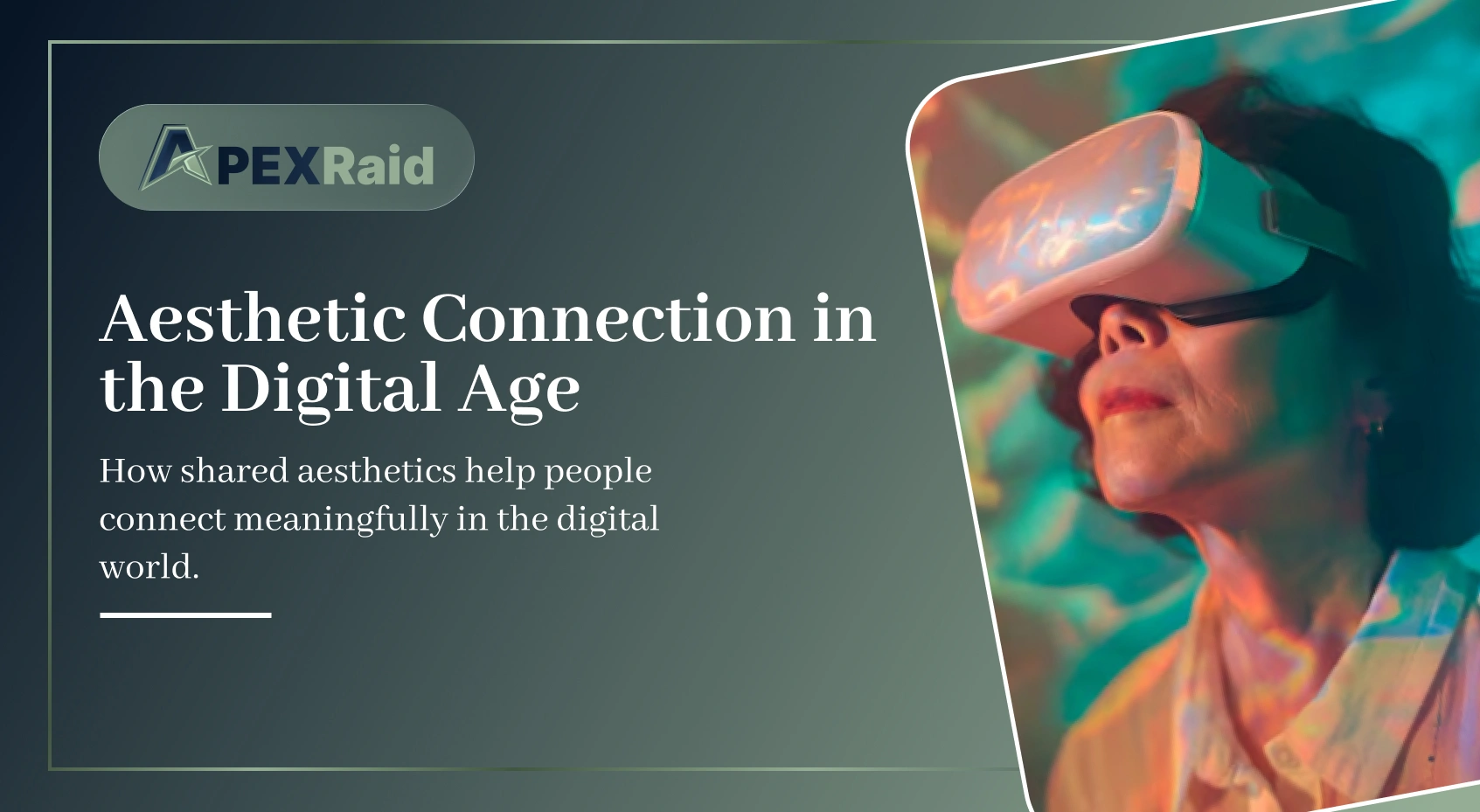
Despite the risks of algorithmic manipulation and corporate commodification, aesthetic connection remains a vital component of modern emotional survival. For individuals living in rural, politically conservative, or geographically isolated areas, the ability to open a screen and instantly connect with thousands of people who view the world through the same visual lens is profoundly validating. As technology evolves — moving toward augmented reality, virtual spaces, and AI-generated art — the mechanics of aesthetic connection will undoubtedly shift, but the underlying human drive will remain the same. We do not just want to be spoken to; we want to be seen. We want to know that the way we perceive beauty, order, and meaning in the world is shared by someone else. In the digital age, a shared aesthetic is not a superficial preference; it is a profound declaration of 'I am here, and I see the world the way you do.'