
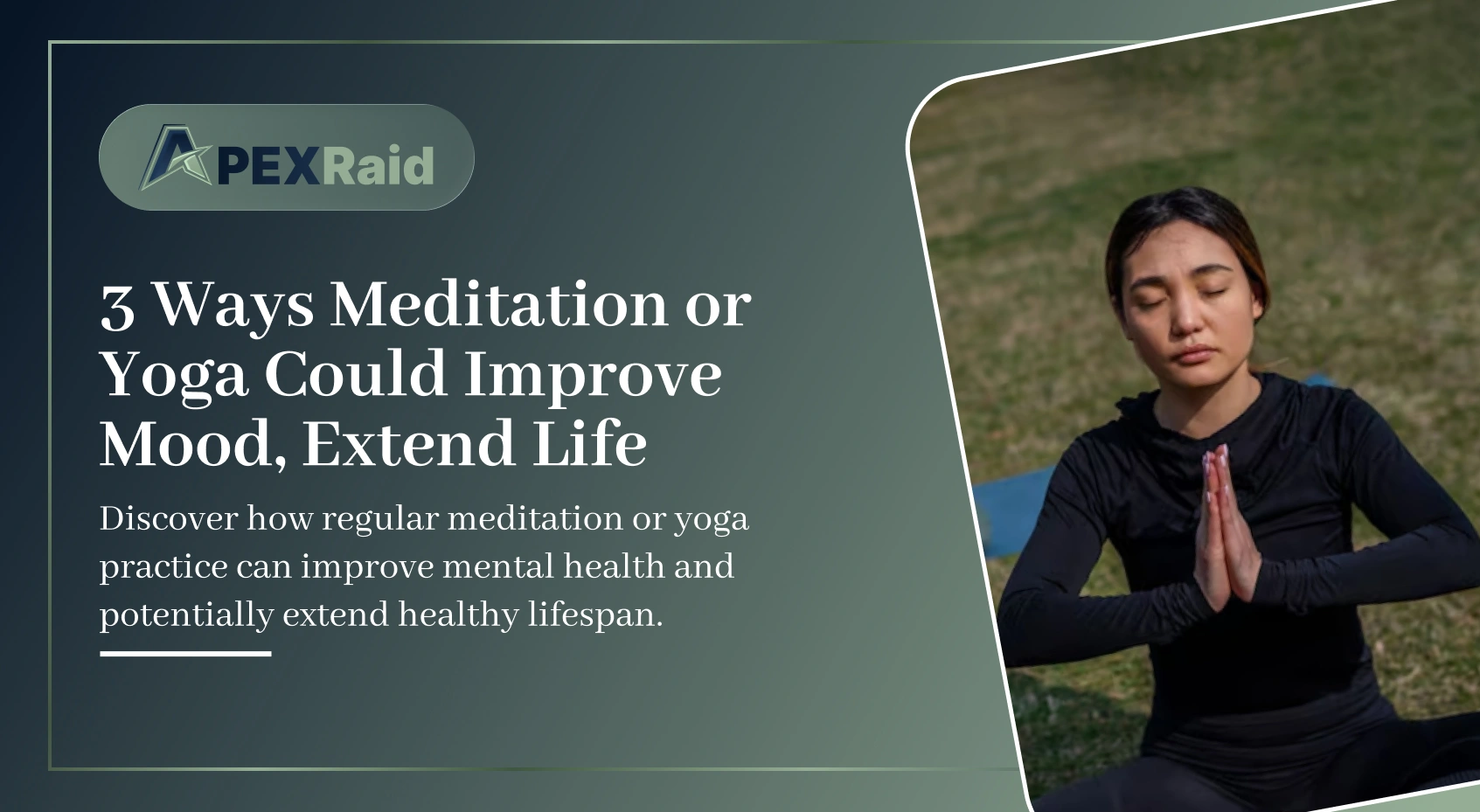
Meditation and yoga occupy an unusual place in modern health culture: they are ancient practices promoted with the language of cutting-edge science, marketed to everyone from anxious teenagers to corporate executives, and supported by a research literature that is simultaneously genuinely promising and frequently overstated. Understanding what the evidence actually shows — and where the gaps are — matters for anyone trying to make practical decisions about these practices.
This guide provides a comprehensive, evidence-based examination of what controlled studies say about how meditation and yoga affect mood, mental health, stress physiology, inflammation, and longevity. Where the evidence is strong, it deserves to be presented clearly. Where it is weak or preliminary, that honesty is equally important. A 2023 review in the Journal of Integrative Medicine found that over 1,500 peer-reviewed studies have been published on meditation and yoga in the past decade alone, reflecting the growing scientific interest in these practices.
What Meditation Is — and the Many Forms It Takes
Meditation is not a single practice. The term covers a range of techniques that share the goal of deliberately directing attention, but differ substantially in method and underlying theory. The most commonly studied forms in Western research contexts are mindfulness meditation, transcendental meditation (TM), and loving-kindness meditation (also called metta).
Mindfulness meditation, rooted in Buddhist Vipassana tradition, involves paying non-judgmental attention to present-moment experience — typically the breath, body sensations, sounds, or thoughts as they arise and pass. The practice is often delivered in structured programmes such as Mindfulness-Based Stress Reduction (MBSR), an eight-week protocol developed at the University of Massachusetts Medical School in the 1970s by Jon Kabat-Zinn. Research on MBSR has shown that the protocol involves 2.5 hours of weekly group sessions, daily home practice of 45 minutes, and a day-long retreat.
Transcendental meditation involves the silent repetition of a personalised mantra for twenty minutes twice daily, with the goal of achieving a specific state of restful alertness. It has a significant separate research literature, much of it produced by or affiliated with the Maharishi Foundation — a fact that independent reviewers note when evaluating that literature.
Loving-kindness meditation focuses on cultivating feelings of warmth and compassion toward the self, then gradually extending them outward to others. It is the form most studied in relation to emotional regulation and social behaviour. Research on loving-kindness meditation has found that even brief practice sessions can increase positive affect and improve social connectedness.
The Neuroscience of Meditation
Recent advances in neuroimaging have provided detailed insights into how meditation changes the brain. fMRI and EEG studies on meditation have documented several consistent changes in brain structure and function:
- Increased prefrontal cortex activity: The prefrontal cortex, responsible for executive function and emotional regulation, shows increased activation during meditation. This is associated with better cognitive control and reduced reactivity to emotional stimuli.
- Reduced amygdala activity: The amygdala, the brain's threat-detection center, shows decreased activation in response to emotional stimuli after regular meditation practice. This represents reduced fear and threat reactivity.
- Increased insula connectivity: The insula, involved in interoceptive awareness (awareness of internal bodily states), shows increased connectivity with other brain regions. This is associated with improved emotional awareness and empathy.
- Reduced default mode network (DMN) activity: The DMN, active during mind-wandering and self-referential thought, shows reduced activity during and after meditation. Excessive DMN activity is associated with rumination and depression.
A landmark study by Lazar and colleagues at Harvard found that long-term meditators had increased cortical thickness in brain regions associated with attention and interoception, suggesting that the brain physically changes in response to regular practice.
The Effect on Anxiety and Depression
The most robust evidence for meditation's psychological benefits relates to anxiety and depression, particularly in people who already have elevated symptoms. A meta-analysis published in JAMA Internal Medicine in 2014, covering 47 randomised controlled trials with over 3,500 participants, found that mindfulness meditation programmes produced moderate improvements in anxiety, depression, and pain. The effect sizes (Hedges' g = 0.38 for anxiety, 0.30 for depression) were comparable to those seen with antidepressant medications in mild-to-moderate depression — though the researchers emphasised that direct comparisons between the modalities were limited by study design differences.
A 2018 Cochrane systematic review — considered the gold standard of evidence synthesis in medical research — examined mindfulness-based cognitive therapy (MBCT) for preventing relapse in people with recurrent depression. The review, which analysed nine trials with over 1,200 participants, found that MBCT reduced relapse rates by roughly 35% compared to usual care, and was comparable in effect to maintenance antidepressant treatment. This finding has influenced clinical guidelines: MBCT is now recommended by the UK's National Institute for Health and Care Excellence (NICE) as a treatment option for people with three or more depressive episodes.
The evidence is weaker for people without significant pre-existing mental health challenges. For healthy adults seeking general wellbeing improvements, the benefits of meditation are real but more modest. A 2021 review in Perspectives on Psychological Science found small-to-moderate effects on stress and anxiety in non-clinical populations (Cohen's d = 0.3-0.4), with significant variability between individuals. Some people appear to benefit substantially; others see little change.
Stress and the Physiology of Cortisol
One of the most commonly cited mechanisms for meditation's effects is its impact on cortisol, the hormone most directly associated with the physiological stress response. Multiple studies have found that regular meditation practice is associated with reduced cortisol levels under both resting conditions and in response to stressors.
A randomised trial published in Health Psychology found that participants completing an eight-week MBSR programme showed significantly smaller cortisol spikes in response to a laboratory stress task compared to a control group. The researchers attributed this to changes in how the participants appraised the stressor — perceiving it as less threatening — rather than to any direct hormonal suppression.
The implication is important: meditation does not appear to work primarily by blocking the stress response. It appears to work partly by changing what triggers that response. Situations that previously felt threatening become, with practice, something the meditator can observe with more equanimity. Whether this represents a genuine cognitive shift or simply a learned relaxation response that transfers to novel situations is a question the literature has not yet fully resolved.
The Mechanisms of Yoga: Beyond Physical Movement
Yoga's effects extend beyond the physical benefits of improved flexibility and strength. Research on the mechanisms of yoga has identified several physiological pathways through which the practice produces its effects:
Vagal tone: Deep breathing techniques used in yoga stimulate the vagus nerve, the primary pathway of the parasympathetic nervous system. Research on vagal tone has found that individuals who practice yoga regularly have higher heart rate variability (HRV), a measure of vagal tone, which is associated with better stress resilience and cardiovascular health.
GABA levels: Yoga practice has been shown to increase levels of GABA (gamma-aminobutyric acid), the brain's primary inhibitory neurotransmitter. Low GABA levels are associated with anxiety and mood disorders. A study published in the Journal of Alternative and Complementary Medicine found that yoga practitioners had 27% higher GABA levels than control participants, and the increase was correlated with reduced anxiety scores.
Interoceptive awareness: Yoga cultivates awareness of internal bodily states, including heartbeat, breathing, and muscle tension. Research on interoception has found that improved interoceptive awareness is associated with better emotional regulation and reduced reactivity to stress.
Yoga: More Than Flexibility
Yoga is similarly heterogeneous as a practice. The form most familiar in Western contexts — Hatha yoga, involving physical postures (asanas), breathing techniques (pranayama), and often a brief meditation component — is one branch of a much broader tradition. Research findings from studies of one form of yoga do not automatically generalise to other forms.
The physical benefits of yoga practice are relatively well-established. Regular yoga practice improves flexibility, balance, and muscle strength compared to sedentary controls. It also reduces lower back pain, with a 2017 Cochrane review finding moderate-quality evidence that yoga produced meaningful reductions in chronic lower back pain and disability in the short to medium term.
The psychological and physiological benefits are more interesting and more contested. Several well-designed studies have found that yoga practice is associated with reductions in self-reported stress, anxiety, and depression scores. A 2015 meta-analysis in the Journal of Psychiatric Research examining 25 randomised controlled trials found significant improvements in anxiety and depression across studies (Hedges' g = 0.4-0.6), though the methodological quality of individual studies varied widely.
Inflammation Markers and Immune Function
A smaller but growing body of research has examined whether meditation and yoga affect inflammatory markers in the blood — particularly C-reactive protein (CRP) and interleukin-6 (IL-6), both associated with chronic low-grade inflammation that underlies many serious health conditions including cardiovascular disease, type 2 diabetes, and some cancers.
A 2017 meta-analysis in Brain, Behavior, and Immunity examined 18 randomised controlled trials and found that mind-body interventions including meditation and yoga were associated with statistically significant reductions in CRP and IL-6. The effect sizes were modest (Cohen's d = 0.2-0.3), but the researchers noted that even small reductions in chronic inflammation, sustained over time, could have meaningful implications for long-term health.
The mechanism proposed is related to the sympathetic nervous system. Chronic stress activates the sympathetic 'fight or flight' system, which over time drives inflammatory signalling through the NF-κB pathway. Practices that reliably shift the nervous system toward parasympathetic ('rest and digest') activity may reduce this inflammatory load. However, the causal pathway from meditation to reduced inflammation in humans remains incompletely established, and the studies are often short-term with small samples.
The Longevity Question
Claims that meditation or yoga extend lifespan are popular but significantly harder to substantiate. The research on longevity almost always involves association studies — comparing long-term meditators with non-meditators on health outcomes — rather than randomised controlled trials, which would require following participants for decades.
Telomere length has become one of the proxies for studying this question. Telomeres are protective caps on chromosomes that shorten with age and with chronic stress exposure; shorter telomeres are associated with increased risk of age-related disease. Several studies led by researcher Elizabeth Blackburn, who won the Nobel Prize for her work on telomeres, have found that long-term meditators have longer telomeres than matched controls, and a randomised trial found that an intensive meditation retreat produced measurable increases in telomerase activity — the enzyme that maintains telomere length.
Whether these effects translate into longer actual lifespan remains unproven. Association between longer telomeres and longer life exists in population data, but the relationship is probabilistic rather than deterministic, and the effect sizes from short-term meditation interventions are small relative to the other factors that influence telomere length, including diet, exercise, sleep quality, and socioeconomic stress.
The most honest summary of the longevity evidence is this: there are plausible biological mechanisms and suggestive preliminary data, but no study has followed randomly assigned meditators for long enough to establish that regular practice meaningfully extends life. The beneficial effects on cardiovascular risk factors, inflammation, and sleep quality do suggest the possibility of a longevity benefit — but the direct evidence does not yet support confident claims in either direction.
Potential Harms and Contraindications
While the benefits of meditation and yoga are widely discussed, the potential harms are less frequently acknowledged. Research on adverse effects of meditation has documented that a small but significant minority of practitioners experience negative outcomes, including anxiety, depersonalisation, and the intensification of psychotic symptoms in predisposed individuals.
A 2022 systematic review found that approximately 8% of meditation practitioners reported some form of negative experience, with the most common being increased anxiety (4%), depression (3%), and trauma re-experiencing (2%). The risk appears to be higher for individuals with pre-existing mental health conditions, particularly those with a history of trauma or psychotic disorders.
Yoga carries the risk of physical injury, particularly when practised without proper instruction. Research on yoga injuries has found that the most common injuries are strains to the hamstrings, lower back, and shoulder, with the risk being higher for beginners and those who push beyond their limits. The incidence of serious injury is low, but the popularity of yoga means that even a small percentage translates into a significant number of injuries annually.
These risks should not deter people from practising but should inform how they practice. For individuals with a history of trauma, trauma-informed yoga and meditation instruction is recommended. For those with mental health conditions, supervision by a qualified instructor and coordination with a mental health professional is advised. For physical practice, starting with qualified instruction and progressing gradually are the safest approaches.
What Practice Level Produces Benefits
One practical question that the research partially addresses is how much practice is needed to produce measurable effects. The MBSR protocol that produces the most consistent research results involves about 40 to 45 minutes of daily practice over eight weeks, with a day-long retreat at roughly week six. This is a significant time commitment and one that many people do not sustain.
Studies of briefer interventions — single sessions of 20 minutes, or eight-week programmes with 10–15 minutes of daily practice — show smaller but still detectable effects on stress and mood. A 2019 study using a smartphone meditation app found that 10–13 minutes of daily practice over 30 days produced significant improvements in wellbeing, positive affect, and reduced anxiety in non-meditating adults. The gains were smaller than those seen in intensive programmes, but the accessibility of a shorter practice is itself clinically meaningful if it increases participation.
The evidence on yoga suggests that one to two sessions per week of 60–90 minutes each produces most of the measurable psychological benefits seen in research studies. More frequent practice does not appear to produce proportionally larger psychological benefits, though it likely produces greater physical conditioning improvements.
Who Benefits Most
The research consistently shows that people with higher baseline levels of stress, anxiety, and depression benefit more from meditation and yoga than people who start from a baseline of good mental health. This is not to say that healthy people do not benefit — they do — but the effect sizes are larger and more consistent in clinical populations.
Individual responses also vary significantly. Researchers have identified several factors associated with stronger meditation outcomes: higher openness to experience as a personality trait, the ability to engage with the practice without excessive self-judgment, access to in-person instruction rather than app-based learning only, and the presence of a supportive community context. People who struggle with intrusive thoughts during meditation — a common experience — often benefit from a more structured programme with an instructor who can address this specifically, rather than self-guided practice.
Realistic Expectations
Meditation and yoga are not treatments for serious mental illness. They are not substitutes for appropriate medical care, psychotherapy, or medication when those are indicated. The research that shows meaningful benefits positions these practices as complements to, rather than replacements for, conventional health interventions.
They are, however, practices with a genuine evidence base for reducing stress, improving mood, supporting recovery from anxiety and depression, and potentially reducing some cardiovascular and inflammatory risk factors. These benefits are real and worth pursuing for their own sake, independent of the more speculative longevity claims.
The best approach is to engage with these practices with the same critical intelligence you would bring to any health intervention: understand what the evidence says, set realistic expectations, use qualified instructors for at least the initial learning phase, and evaluate your own response honestly over time.
As the body of research on mind-body interventions continues to grow, the evidence supports the value of these practices for many people, while also highlighting the need for honest communication about their limitations. The practices are not magic, but they are genuinely useful tools for many who engage with them thoughtfully.