
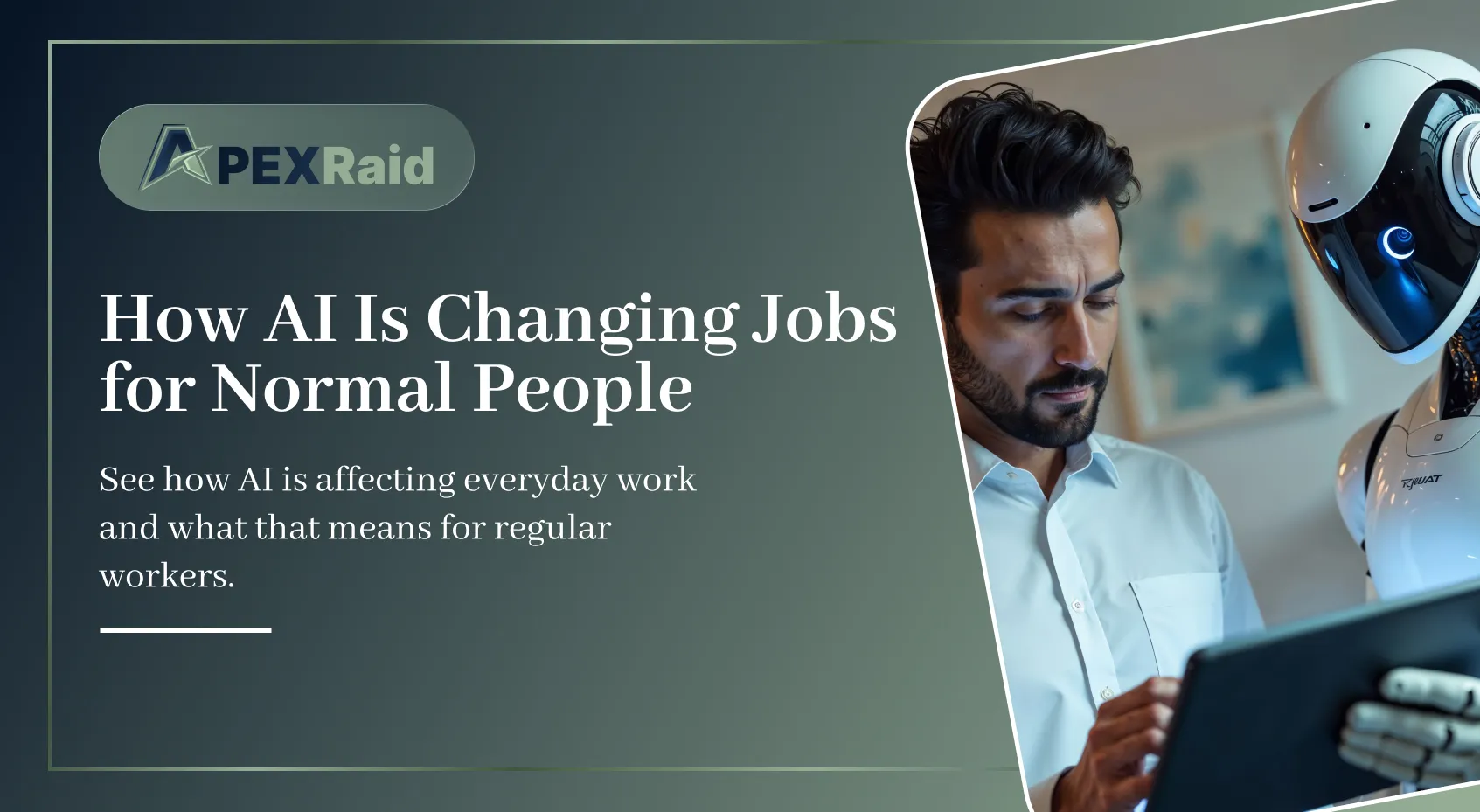
Public discourse surrounding artificial intelligence and employment tends to oscillate between two extremes: the utopian vision where AI eliminates all drudgery, and the dystopian fear of mass, permanent unemployment. Both narratives fundamentally misunderstand how technological adoption actually works in the broader economy. For the vast majority of workers — administrators, marketers, project managers, junior analysts, customer support representatives, and educators — the impact of AI is not a sudden replacement. It is a gradual, systemic restructuring of daily workflows. The computer is not taking the job; it is taking over specific, time-consuming components of the job, forcing a redefinition of what human labor actually adds to the process.
Understanding this transition requires moving past headlines about artificial general intelligence and looking at the practical integration of large language models (LLMs) and machine learning tools into everyday enterprise software. The changes happening right now are subtle but profound, shifting the fundamental nature of knowledge work from content generation to content curation and strategic judgment. The World Economic Forum's Future of Jobs Report 2025 estimates that by 2030, 42% of business tasks will be automated, with knowledge workers experiencing the most significant transformation in their daily responsibilities.
The Economic History of Automation and Job Displacement
To understand the current moment, it helps to look at the broader history of automation and employment. Each major technological wave has been accompanied by predictions of mass unemployment, and each time, the predictions have been wrong — though not in the way optimists expected. Economic research on the history of automation reveals a consistent pattern: technology eliminates specific jobs but creates entirely new categories of work that did not previously exist. The invention of the automobile eliminated the horse-and-buggy industry but created the automotive manufacturing and service economy. The personal computer eliminated the typing pool but created the IT support and software development sectors.
The key insight from this history is that the transition is never smooth for the individuals whose jobs are displaced. Entire communities can be devastated when a major industry collapses. However, at the aggregate level, employment has consistently expanded, not contracted, in response to technological change. Research by economists Daron Acemoglu and Pascual Restrepo has found that while automation displaces workers from specific tasks, it also creates new tasks that require human labor, and the net effect on employment has historically been positive. The challenge is not whether there will be enough work, but whether workers can adapt to the new forms of work that emerge.
This historical perspective is important because it suggests that current fears of permanent, mass unemployment are likely exaggerated. However, it also suggests that the transition will be painful for many workers, and that the nature of work will change significantly. The question is not whether AI will eliminate jobs, but which jobs will be transformed, and how quickly workers can adapt to the new demands.
The Unbundling of the Job Description
To understand AI's impact, one must stop thinking of a 'job' as a single monolithic entity and instead view it as a bundle of discrete tasks. A marketing manager does not just 'do marketing.' They draft emails, analyze campaign metrics, synthesize meeting notes, brainstorm campaign concepts, format reports, and coordinate across departments. The task-based approach to automation, developed by economists like Daron Acemoglu and David Autor, has been instrumental in understanding how technology affects employment.
Historically, automation replaced physical labor — manufacturing, agriculture, and routine physical processing. The current wave of generative AI is targeting cognitive tasks, specifically those involving the processing, summarizing, and basic generation of text, code, and images. When an AI tool is introduced, it does not automate the marketing manager; it automates the first draft of the email, the summarization of the meeting, and the initial formatting of the report.
Economists refer to this as 'task displacement.' When a substantial percentage of a worker's tasks are displaced by AI, their daily reality changes significantly. The hours previously spent wrestling with a blank page or manually extracting data from a spreadsheet are suddenly freed up. The critical question for the worker — and their employer — is how that freed time is reallocated. Does the employer expect double the output, or does the worker reinvest that time into higher-order strategic thinking and relationship building? Research on task displacement has found that the answer depends significantly on organizational culture and management strategy.
The Shift from Creator to Editor
Perhaps the most universal change across knowledge work is the shift in the human role from 'creator' to 'editor' or 'curator.' Before generative AI, the bottleneck in most knowledge work was production. Writing a legal brief, drafting a software script, or outlining a lesson plan took hours of sustained, focused effort to produce the initial raw material.
Today, AI can produce a structurally sound, grammatically correct, and statistically plausible first draft in seconds. The bottleneck has shifted from production to verification and refinement. The human worker's primary value is no longer generating the text; it is evaluating the AI's output for accuracy, tone, nuance, and strategic alignment. This requires a different cognitive skill set. Generating content from scratch requires blank-page creativity and deep subject matter internalization. Editing AI output requires critical analysis, domain expertise to spot subtle hallucinations (plausible but factually incorrect statements), and strong editorial judgment. A junior copywriter who previously spent their day writing blog posts may now spend their day generating, reviewing, fact-checking, and refining five times as many AI-drafted posts. Their job title remains the same, but the cognitive demands of their day have completely transformed.
The Future of Work: Scenarios and Projections
Looking ahead, several scenarios are possible. The optimistic scenario is that AI increases productivity across the economy, creating new industries and new forms of work that we cannot yet imagine — much as the internet created jobs like social media manager, SEO specialist, and UX designer that did not exist in 1990. The World Economic Forum's 2025 report projects that AI will create 97 million new jobs globally by 2030, while displacing 85 million, resulting in a net gain of 12 million jobs. The challenge is that the new jobs require different skills than the displaced ones.
The pessimistic scenario is that the transition is too fast for workers to adapt, leading to significant unemployment and social disruption. This is not a prediction; it is a risk that can be mitigated by policy, education, and corporate strategy. Research on AI and employment projections suggests that the most likely outcome lies somewhere in between: a significant restructuring of work that creates new opportunities but also leaves many workers behind if they do not have the resources and support to adapt.
The Productivity Paradox and 'Good Enough' Work
One of the more complex dynamics emerging in the modern workplace is the standardization of 'good enough' work. Generative AI excels at producing competent, average outputs. It writes emails that sound professional, generates reports that look structured, and creates code that mostly functions. In many corporate environments, 'competent and average' is entirely sufficient for internal communications, routine reports, and standard operating procedures. AI allows workers to clear these lower-tier tasks rapidly.
However, this creates a flattening effect on the quality of work. If everyone uses the same LLMs to draft their communications, corporate language becomes increasingly homogenous and sterile. Research on AI-generated corporate communications has found that while AI-written emails are grammatically correct and structurally sound, they tend to lack the distinctive voice and emotional nuance that characterizes high-trust human communication.
The workers who will distinguish themselves in this environment are those who know when to accept the AI's 'good enough' output to save time, and when a task requires the injection of genuine human insight, unusual creative synthesis, or deep empathy — qualities that current AI models cannot reliably simulate. The premium will be placed on work that clearly demonstrates it was not generated by an algorithm.
Impact Across Specific Industries
While the broader trends apply across knowledge work, the specific implementation varies significantly by sector.
Customer Support and Service: This sector is experiencing some of the most aggressive AI integration. Traditional chatbots were rigid decision trees that frustrated users. Modern AI agents can understand natural language, access customer databases, and resolve complex queries autonomously. For human support agents, this means the easy, repetitive questions (password resets, shipping status) are entirely filtered out. The human worker is left handling only the most complex, emotionally charged, or highly nuanced escalations. The job becomes more cognitively demanding and emotionally taxing, as every interaction involves a frustrated customer whose problem an AI could not solve. Research on AI in customer support has found that the highest-value support agents are those who can de-escalate emotional situations and build rapport — skills that current AI models cannot replicate.
Software Development: Programmers were among the first to heavily integrate AI into their daily workflows through tools like GitHub Copilot. AI assists by auto-completing code, finding bugs, and writing routine boilerplate scripts. This dramatically accelerates development speed. Junior developers, whose roles often involved writing this routine code, find themselves needing to level up faster to focus on system architecture, security, and complex problem-solving — areas where AI still struggles to maintain coherent context across large codebases. Research on AI in software development has found that developers using AI tools are 40-50% faster at routine tasks but spend more time on system design and security review.
Legal and Compliance: The legal profession involves massive amounts of text processing — reviewing contracts, searching through case law, and drafting standard agreements. AI tools are increasingly capable of summarizing hundreds of pages of legal documents in seconds and flagging anomalies in contracts. Paralegals and junior associates are seeing their research time drastically reduced. The value of a lawyer shifts even more heavily toward negotiation, strategic counsel, and courtroom advocacy. Research on AI in the legal profession has found that junior associates spend significantly less time on document review but more time on strategic analysis and client relationship management.
Education: Teachers are facing a dual challenge. On one hand, AI significantly reduces administrative burden. Tools can generate lesson plans, draft parent communications, and even provide initial grading rubrics, saving teachers hours of unpaid evening work. On the other hand, the ease with which students can use AI to generate essays and assignments has forced a complete rethinking of assessment. Teachers must redesign curricula to evaluate the process of learning rather than just the final written product. Research on AI in education has found that the most effective responses involve shifting assessment toward oral presentations, collaborative projects, and portfolios that demonstrate the learning process.
The Premium on Human Friction
As AI makes the production of digital artifacts nearly frictionless, friction itself will gain value. In a world where an executive can generate a 50-page strategic report in three minutes, the report itself loses signaling value. What retains value is the human effort and accountability behind the work.
We are likely to see a premium placed on synchronous human interaction — in-person meetings, live presentations, and unscripted conversation. These are environments where AI cannot easily mediate the exchange, and where human qualities like charisma, emotional intelligence, persuasion, and real-time adaptability are strictly required. Research on the value of human interaction in the workplace has found that face-to-face communication remains significantly more effective for building trust and resolving complex disagreements than mediated communication.
Furthermore, accountability remains uniquely human. An AI cannot take legal or moral responsibility for a decision. A company cannot fire an algorithm if a marketing campaign is offensive or a financial model causes a loss. Human workers will increasingly function as the 'accountability layer' — the individuals who review the AI's output, sign their name to it, and absorb the risk if it is wrong. Judgment and risk tolerance become primary job skills.
The Psychological Impact of AI-Augmented Work
The integration of AI into work is not just a technical change; it has significant psychological implications for workers. Research on the psychology of AI in the workplace has identified several common responses: anxiety about job security, confusion about new workflows, and a sense of diminished agency as tasks are increasingly delegated to machines. Workers often report feeling less skilled or less valuable when a machine can perform some of their core functions.
At the same time, many workers report that AI tools reduce drudgery and allow them to focus on more interesting and creative aspects of their work. Research on job satisfaction and AI has found that workers who receive training and support in AI integration report higher job satisfaction than those who are expected to figure it out on their own. The key psychological factor is a sense of control: workers who feel they are managing the AI (rather than being managed by it) experience less anxiety and more engagement.
Employers have a significant role to play in this transition. Providing clear communication about AI integration, offering training and support, and involving workers in decisions about how AI tools will be used can mitigate the negative psychological impacts and maximize the positive ones.
The Skills Premium: What Training Actually Pays Off
Given the changes AI is bringing to work, what skills should workers invest in? The World Economic Forum's 2025 report identifies several skills that are likely to increase in value:
- Analytical thinking and innovation: The ability to evaluate complex information, identify patterns, and generate novel solutions. This is the core skill for the 'editor' role described above.
- Critical thinking and analysis: The ability to evaluate AI output for accuracy, bias, and strategic alignment. This is essential for the accountability layer.
- Resilience, stress tolerance, and flexibility: The ability to adapt to rapid technological change and manage the psychological demands of an AI-augmented workplace.
- Leadership and social influence: The ability to motivate, persuade, and coordinate human teams — skills that AI cannot replicate.
- Emotional intelligence and empathy: The ability to understand and respond to the emotional needs of others. This is essential for roles that involve customer interaction, team management, and conflict resolution.
Research on skills for the future of work has consistently found that technical skills (coding, data analysis) are less valuable in the long term than cognitive and interpersonal skills, precisely because technical skills are more easily automated. The most robust career strategy is to build deep domain expertise complemented by strong communication, collaboration, and critical thinking abilities.
The 'Shadow IT' of Everyday AI
A significant portion of AI adoption is happening informally. Workers are not waiting for corporate IT departments to roll out official AI policies; they are using public web-based AI tools on their personal devices to do their jobs faster. They feed confusing emails into chatbots to draft polite replies; they upload complex spreadsheets to data analysis tools to find trends.
This 'shadow AI' creates significant security and privacy risks, as confidential corporate data is routinely pasted into external servers. However, it also demonstrates the intense bottom-up demand for these tools. Workers who master these tools independently often hide their efficiency gains from management, enjoying a quieter workday rather than asking for more work. Eventually, companies will standardize these tools, and the efficiency gains will be absorbed into higher baseline expectations for output.
The transition is not without friction. Many early implementations of AI in the workplace are clunky, require extensive prompt engineering, or produce hallucinations that take longer to fix than if the worker had done the task manually. Learning to manage the AI — understanding its quirks, establishing efficient prompt libraries, and knowing when it is faster to just do the work yourself — has become a mandatory meta-skill for the modern office worker.
How Workers Can Adapt
The advice to 'learn to code' has been replaced by 'learn to prompt,' but even this is shortsighted as AI models become better at understanding natural intent. The most robust strategy for navigating this shift involves cultivating skills that sit outside the domain of pattern recognition and statistical prediction.
First, domain expertise remains critical. An AI can draft a contract, but only a seasoned lawyer knows if the contract actually protects the client's specific business interests in a complex negotiation. The ability to evaluate AI output requires deep, internalised knowledge of the subject matter. Those who use AI to bypass the hard work of learning the fundamentals of their profession will find themselves unable to spot the subtle errors the AI makes. Research on domain expertise in the age of AI has found that the most effective AI users are those with the deepest domain knowledge, not those with the best prompting skills.
Second, relational and emotional intelligence will appreciate in value. Empathy, conflict resolution, team building, and cross-departmental alignment are deeply human tasks. As the technical components of a job are automated, the collaborative components become the primary differentiator between employees.
Third, adaptability is paramount. The AI tools available today are the worst they will ever be; they will only improve. Workers must develop a comfort with continuous technological disruption, treating their workflow as a fluid process that will need to be updated every few months as new capabilities emerge.
Fourth, develop a capacity for judgment under uncertainty. AI can provide probabilistic predictions and generate options, but it cannot decide which option is best when the criteria involve values, ethics, or long-term strategy. The capacity to make good decisions with incomplete information — to exercise judgment — is the core human advantage in an automated world.
Finally, build a network of trusted colleagues. Learning and adapting in isolation is difficult. The most successful adaptation strategies involve collaborative learning, peer support, and sharing of best practices. Research on AI adoption in organizations has found that peer learning networks are among the most effective mechanisms for successful integration.
Conclusion
Artificial intelligence is not waiting in the future; it is already fundamentally altering the present reality of work. It is stripping away the repetitive, text-heavy, and routine elements of knowledge work, leaving behind a concentrated core of tasks that require human judgment, empathy, and accountability.
For the average worker, the immediate future does not look like unemployment. It looks like a faster, more heavily augmented workday where the ability to synthesize, evaluate, and communicate is valued far above the ability to simply produce raw material. The challenge is not outcompeting the machine; it is learning to integrate the machine so effectively that you can focus entirely on the aspects of the work that remain irreducibly human.
As research on human-AI collaboration has shown, the most effective partnerships are those where humans and machines each do what they do best: machines handle pattern recognition and routine generation, while humans provide judgment, empathy, and strategic direction. The future of work is not human versus machine; it is human and machine, working together in ways that amplify the strengths of both.